Every November 11th, millions of Canadians pin a red poppy to their lapels. Yet, behind this massive tradition lies a private living room in Ottawa and the drive of one extraordinary woman. Lillian Freiman—the first Jewish woman to be awarded the OBE—didn’t just launch a charity drive; she wove a personal initiative into the nation’s cultural DNA. Here is the story of how the “Poppy Lady” inspired an entire country to remember, according to ottawaski.
Who Was Lillian Freiman: The Roots of a Leader
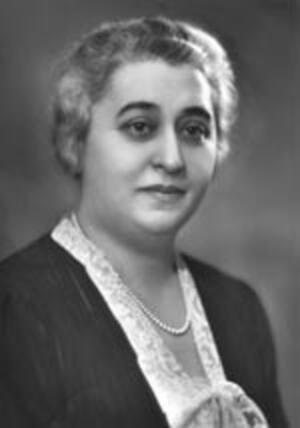
Lillian Bilsky Freiman was born in 1885 in Mattawa, Ontario. Her father, Moses Bilsky, was a Jewish-Canadian merchant and community leader often cited as the first settler in the history of the Jewish community in the region. Lillian was the fifth of eleven children, raised in a home where community service was a way of life.
When World War I broke out, Lillian took immediate action. She installed 30 sewing machines in her home and organized Red Cross circles. These volunteers gathered blankets and clothing to send to soldiers overseas. This initiative eventually evolved into the Imperial Order Daughters of the Empire (IODE), a women’s charitable organization that continues to provide scholarships, grants, and educational projects across Canada today.
Her efforts didn’t stop there. She co-founded the Great War Veterans’ Association, which later transformed into the Royal Canadian Legion. By 1919, it was the largest veterans’ organization in the country. Lillian Freiman secured her place in history as the first woman to be granted honorary life membership in the Legion.
The Birth of a Symbol: Why the Poppy Became Her Life’s Work
The transformation of the poppy from a wildflower into a national icon was no accident. It was a unique convergence of poetic inspiration, diplomatic effort, and Lillian Freiman’s organizational genius.
It began with Lieutenant-Colonel John McCrae’s legendary poem, “In Flanders Fields,” where poppies blooming among soldiers’ graves became a metaphor for remembrance. The idea was later championed by Anna Guérin, France’s “Poppy Lady,” who traveled to Canada in 1921 to convince veterans’ associations to adopt the flower as a fundraising tool.
When the idea reached Canadian soil, Lillian Freiman became the engine that drove it forward. In 1921, a shipment of poppies from France was delayed, threatening the entire campaign. Lillian refused to let the initiative fail.
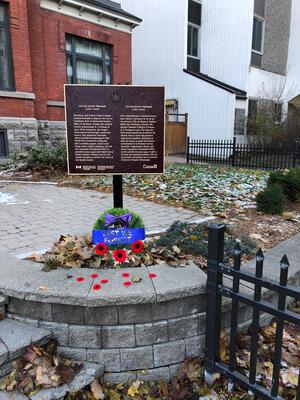
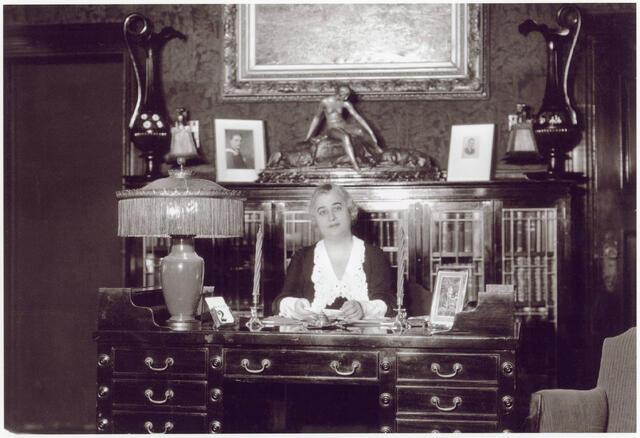
She turned her living room on Somerset Street West into a makeshift assembly line. She gathered a team of volunteers and veterans who handcrafted the very first Canadian poppies using red cloth and wire. This Victorian mansion was later converted into an Army Officers’ Mess, and in 2018, the Canadian government unveiled a commemorative plaque honoring her work in building intercultural bridges through community service.
The 1921 Campaign: How Handcrafted Flowers Supported Veterans
What started as an emergency home project quickly scaled into a massive operation. Lillian possessed an extraordinary talent for logistics and marketing. She intentionally hired disabled veterans for the work, providing them with both a steady income and a renewed sense of purpose.
By 1924, the operation was so successful that her workshop produced nearly 3 million poppies annually. For Lillian, the poppy was never just an accessory. It was a living ledger of the debt society owed to those who sacrificed their health for peace. She served as the first female chair of the Poppy Committee, a position she held until her death.
A Life of Influence and Compassion
In 1903, Lillian married Archibald Jacob “Archie” Freiman, a prominent businessman and Zionist leader. Archie was one of the most influential Jewish figures of his generation, and his family was certainly among Ottawa’s richest families. He owned Freiman’s Department Store on Rideau Street, a landmark in the city’s retail history.
The couple used their social and financial influence to lobby the government on critical issues. They successfully brought 150 orphans to Canada—one of whom they personally adopted—and worked tirelessly to prevent the deportation of newly arrived Jewish immigrants. Lillian also led a nationwide tour for the Hadassah Help Fund, raising $200,000 for refugees, which was an unprecedented sum at the time.
To this day, the Lillian Freiman Society continues to honour her legacy by recognizing major donors who support charitable causes. Her spirit of generosity remains a guiding light for philanthropic efforts across the country.
The Lasting Legacy of the Poppy Lady
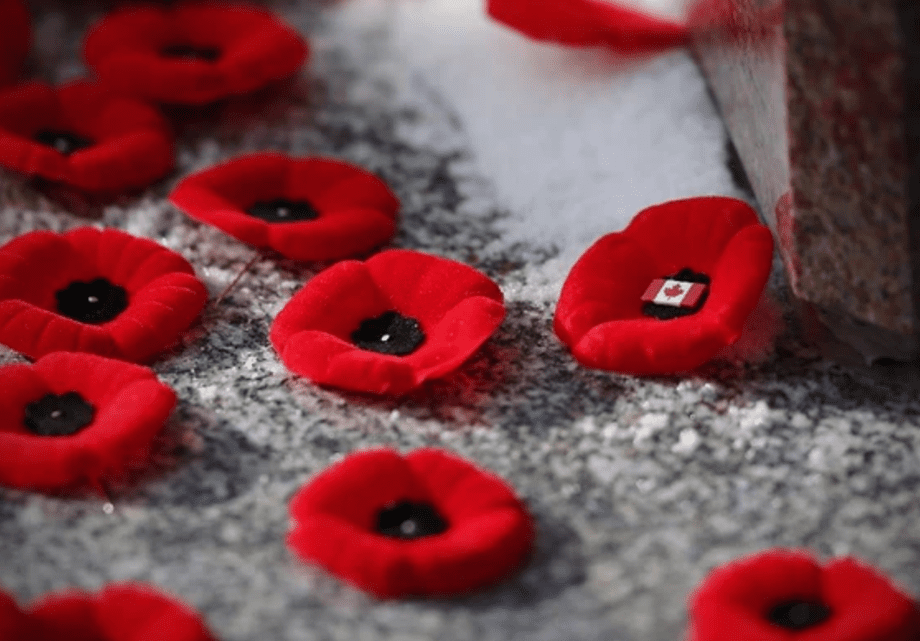
Lillian Freiman passed away in 1940. Her impact was so profound that the government permitted Jewish civil servants to take leave to attend her funeral, and Jewish-owned businesses across the city closed their doors in respect. She was mourned by the Mayor of Ottawa, the Prime Minister, and a guard of honour from the Royal Canadian Legion. In a final tribute, her casket was covered in red poppies.
While the red poppy is now a permanent part of Canada’s cultural identity, it is important to remember the woman behind the symbol. Lillian Freiman’s legacy goes beyond fundraising; she proved that compassion and civic activism can unite a nation in gratitude. Her name is forever etched in Canadian history, blooming every November as a reminder of the power of the human spirit.