

In the 21st century, societal attitudes have changed significantly. People have become more open-minded and free. In the 21st century, Canadians were among the strongest supporters of legalizing same-sex marriages. While in European countries, approximately 70% of the population supported the official recognition of same-sex marriages, in Canada, this number reached 80%.
However, the situation in the 20th century was very different. Same-sex relationships were considered illegal and were punished with the full force of the law. In the 1960s, an Ottawa resident was sentenced to life imprisonment as a highly dangerous criminal simply because of his sexual orientation. Further details at ottawaski.com.
The Tragic Story of a Young Man with a Non-Traditional Orientation
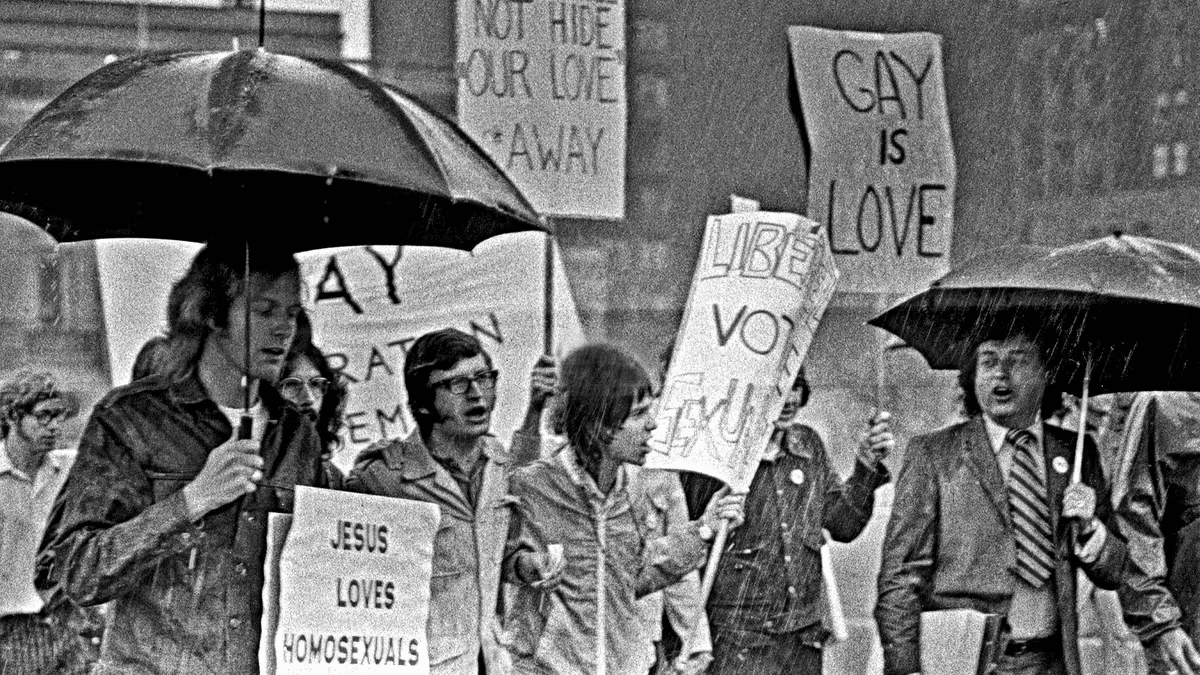
In the 20th century, the concept of non-traditional sexual orientation was not understood by Canadians or the majority of people worldwide. Those identifying as homosexuals were considered mentally ill or criminals and were imprisoned simply because of their identity and whom they chose to love.
One of the victims of society’s oppression against same-sex relationships was Everett Klippert from Ottawa. At a young age, he realized that he was attracted to men and that he did not want to hide his love but rather legalize his marriage with his chosen partner. However, due to these statements, in 1967, Klippert was charged as a highly dangerous criminal and sentenced to life imprisonment.
Yet fate showed him some mercy. Public perception in Ottawa regarding same-sex relationships gradually began to change. People started holding rallies, and the government began reforming the laws, which eventually led to Klippert’s release in 1971.
How Did Change Begin?
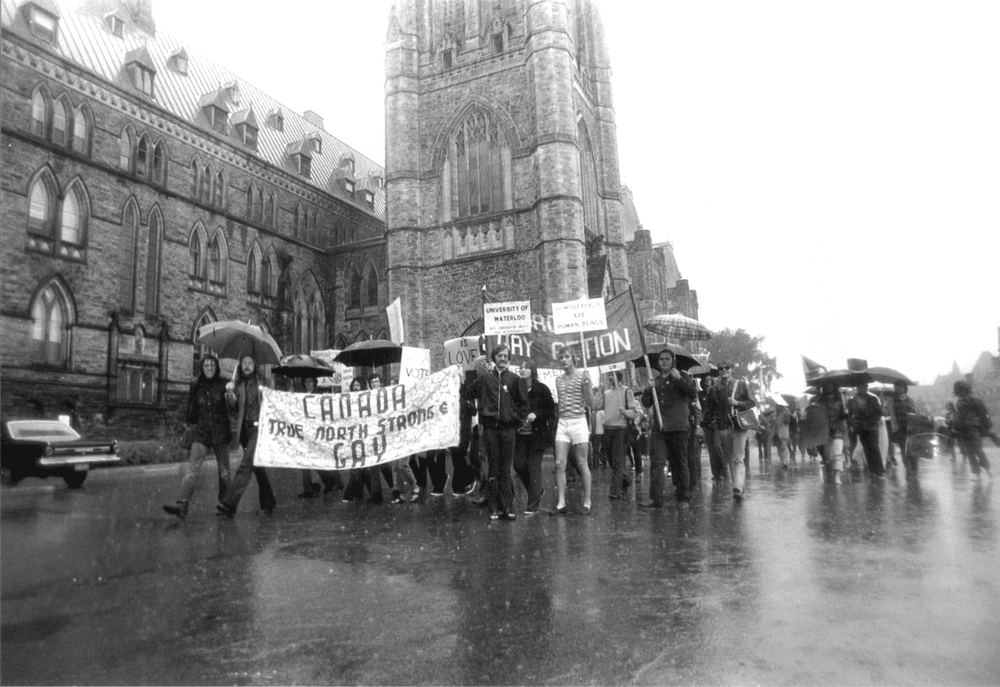
When Klippert was sentenced to life in prison, he lost all hope. He was devastated and deeply saddened by the injustice of being convicted for his beliefs and orientation, despite having never committed any crime.
One year into Klippert’s imprisonment, public opinion in Ottawa shifted. A majority of people began supporting the legalization of same-sex relationships, but only for individuals aged 21 and above and only with mutual consent. Just a year earlier, such relationships had been considered a criminal offense.
Pierre Trudeau’s Bill
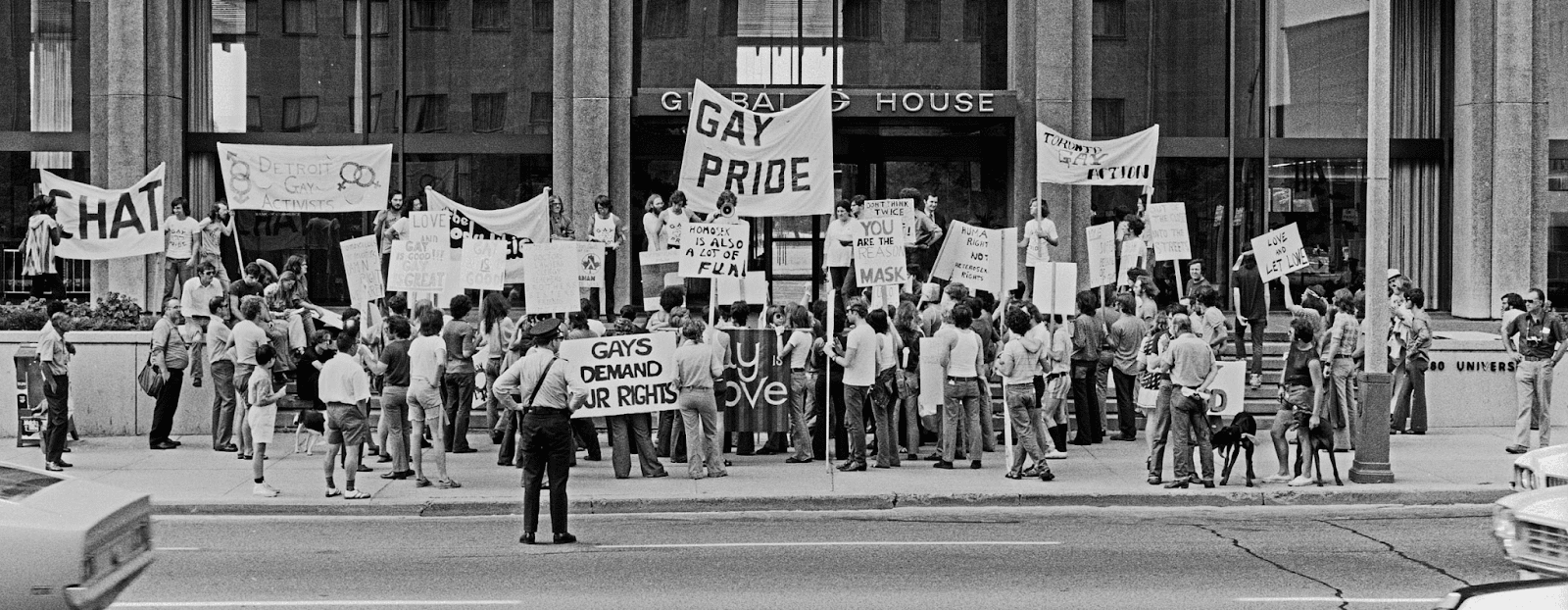
The major changes to Canada’s Criminal Code began under Pierre Trudeau in 1969. A massive bill was passed, introducing extensive reforms concerning firearms, lotteries, abortions, contraception, and same-sex relationships. While in 1968, Ottawa residents supported the legalization of consensual same-sex relationships from the age of 21, legalization only took effect in 1969.
However, despite the growing acceptance of same-sex relationships among Ottawa’s population and their new legal status, many still considered homosexuality a mental disorder. In Canada, homosexuality was only removed from the list of psychiatric disorders in 1987.
Ottawa residents increasingly supported the rights of homosexuals, and the Canadian government officially recognized same-sex relationships, but this did not protect LGBTQ+ individuals from oppression, mistreatment, discrimination, and suffering at the hands of those who remained hostile toward them.
Protests Against Discrimination of Homosexuals
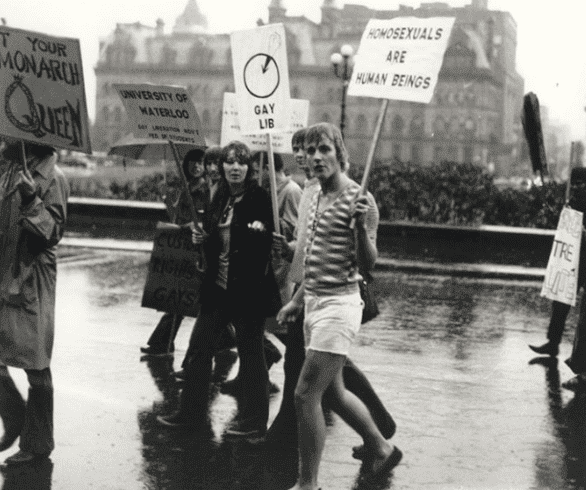
The legalization of same-sex relationships between men did not stop discrimination and harsh repression. As a result, activists in Ottawa—primarily young students—began organizing street protests in 1971 under the banner of “Gay Liberation” to demand equal rights with heterosexuals. For Klippert, who had been sentenced to life imprisonment in 1967 simply for his sexual orientation, this movement offered a glimmer of hope for release and a chance at a normal, free life with his partner.
Ottawa activists submitted a petition to the government demanding that it address the concerns of Canada’s LGBTQ+ community. Much of the prejudice in Ottawa regarding same-sex relationships stemmed from federal government policies, so activists insisted that the government correct its past mistakes.
Demands
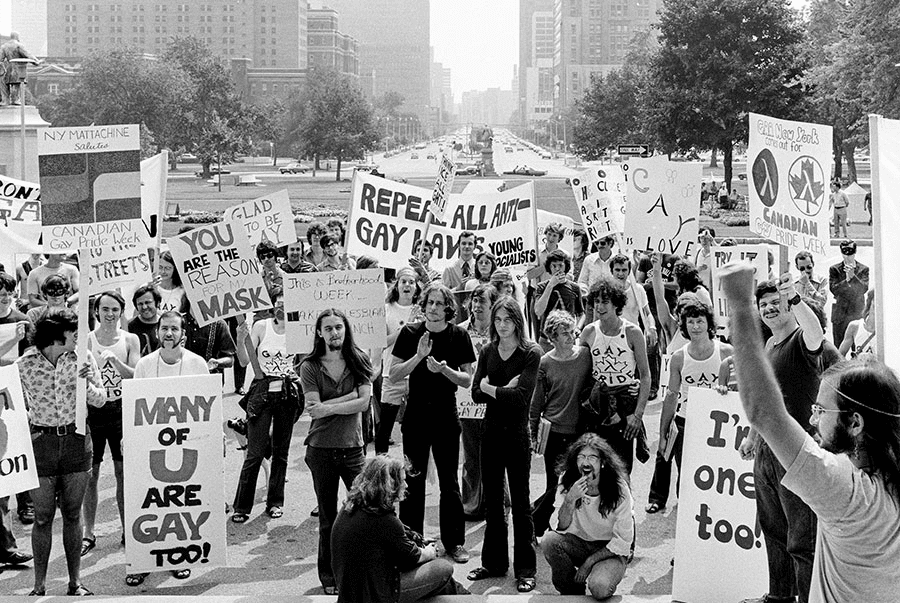
During the “Gay Liberation” protests, students presented the government with ten demands. The first three sought equal rights for homosexuals and heterosexuals in Canada’s Criminal Code. Activists pushed for the removal of vague legal terms such as “gross indecency,” “indecent act,” and “buggery”, which had been used to imprison homosexuals as “highly dangerous sexual offenders.” It was under such laws that the innocent Klippert was sentenced to life in prison.
In the summer of 1971, the court reconsidered Klippert’s case and ruled in favor of his release. After four years behind bars, Klippert stepped into a rapidly changing world—one where space was being made for LGBTQ+ individuals, and where a fierce struggle for equal rights with heterosexuals was underway. Klippert finally had hope of living the life he had always wanted.
The fourth demand from activists called for the right of LGBTQ+ individuals to enter Canada freely. The fifth demand sought equal employment opportunities and promotions for homosexuals, while the sixth addressed marriage and child custody rights. The seventh demand requested that LGBTQ+ individuals be allowed to serve in Canada’s Armed Forces.
The eighth demand aimed to put an end to the RCMP’s discriminatory policies. The ninth sought expanded legal protections for homosexuals. The tenth demand urged all public servants to actively work toward changing society’s negative perceptions of LGBTQ+ individuals.
Changes
The demands made by activists were not implemented immediately. It was a lengthy process that took decades. Year by year, the government gradually granted equal rights to LGBTQ+ individuals, introducing amendments and repealing laws that had oppressed them. However, progress was often slow, hindered by constant shifts in political leadership.
Nevertheless, progress continued, and by the 21st century, LGBTQ+ rights in Canada had reached near equality with those of heterosexuals.