

Scientific advancement plays a crucial role in society. In Ottawa, research is primarily people-oriented. Interestingly, Canada’s capital provides numerous companies with a strong foundation for research and development. Who are these scientists, and what contributions have they made? Ottawa Ski explores the city’s renowned scientists.
James Hargreaves
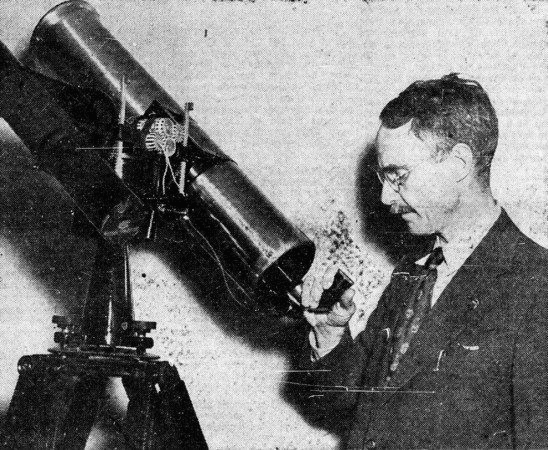
James Hargreaves was a renowned Canadian engineer, amateur astronomer, and a fascinating figure. In 1930, he emigrated to Canada and settled in the village of Massawippi, Quebec. During that period, his primary focus was breeding purebred livestock, following extensive travels. His passion for astronomy led him to study around 38 solar eclipses.
Later, in 1947, he moved to Ottawa with his wife. While Mary Hargreaves pursued education, James continued his astronomical work. He eventually became president of the Ottawa Centre of the Royal Astronomical Society of Canada. He retired in the early 1960s and passed away in 1985 at the age of 86.
William King and Otto Klotz
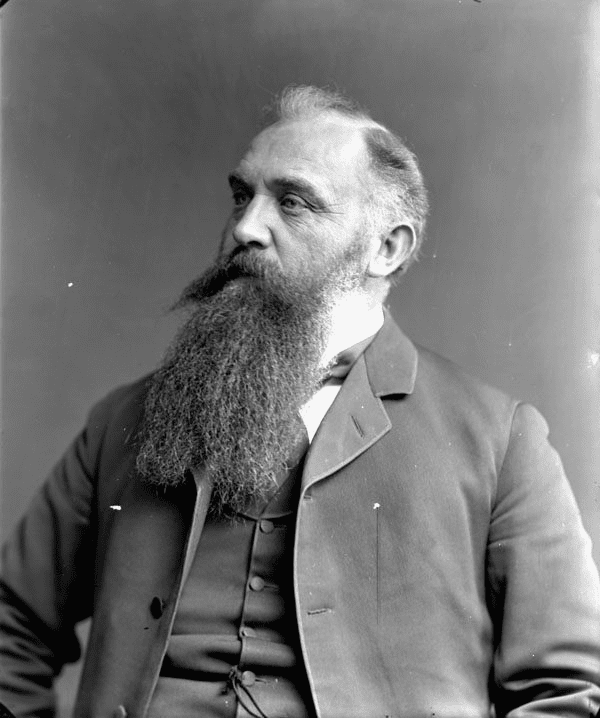
These world-renowned scientists played a significant role in establishing the Dominion Observatory in 1905 at Ottawa’s Central Experimental Farm. This observatory became the heart of scientific research in the capital.
William King and Otto Klotz collaborated with architect David Ewart, who ensured that the building also became a hub for astronomical and geophysical research.
King was a civil servant, astronomer, and Canadian surveyor. In 1908, he was appointed a Companion of the Order of St. Michael and St. George. He also served as a member and later the president of the Royal Society of Canada from 1911 to 1912.
Otto Klotz moved to Ottawa in 1892 but continued his research across various locations. His later work focused on geophysics. In 1907, he led a nationwide geomagnetic survey of Canada and became highly engaged in seismology, a then-emerging field.
After King’s death in 1916, Klotz was expected to succeed him in the Dominion Observatory and the Geodetic Survey of Canada. However, the position was given to Wilbert Simpson, who was not a scientist. In response, the entire scientific team signed a memorandum in 1917 supporting Klotz, addressed to Minister of the Interior William Roche. As a result, Klotz was eventually appointed to the position.
Mark Freedman
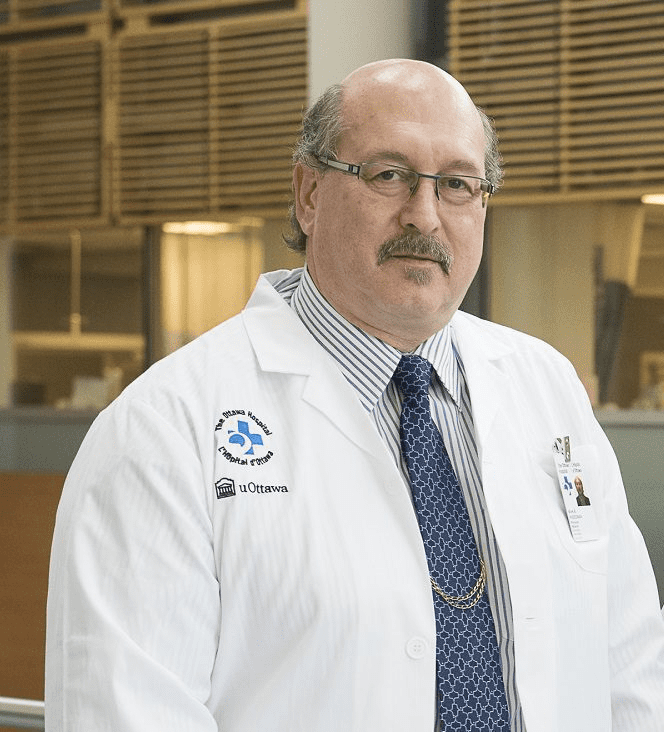
Mark Freedman is a senior scientist with the Neuroscience Program at the Ottawa Hospital Research Institute and a professor of medicine at the University of Ottawa’s Department of Neurology. He also serves as the director of the Multiple Sclerosis Research Unit at The Ottawa Hospital.
His research focuses on clinical trials and neuroimmunology. Dr. Freedman completed his medical degree at the University of Toronto and pursued advanced training at the Weizmann Institute of Science in Israel. He has also worked in London and at the Montreal Neurological Institute as an assistant professor.
Freedman has authored over 250 publications, including books, articles, abstracts, and book chapters. His work has been presented both locally and internationally.
Jeremy Grimshaw
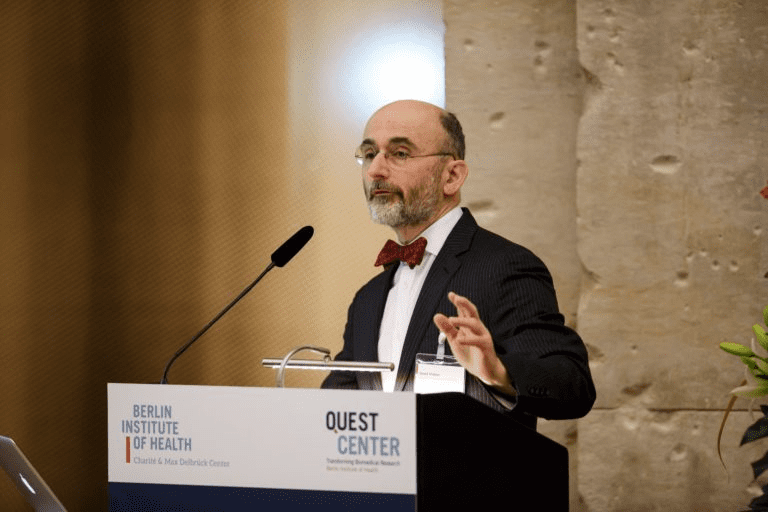
Jeremy Grimshaw completed his medical degree at the University of Edinburgh and later earned a Ph.D. in medical services research from the University of Aberdeen.
In 2002, he moved to Canada and joined the Ottawa Hospital Research Institute. His research focuses on evaluating interventions to disseminate evidence-based practices, with the goal of improving clinical care. He currently serves as a senior scientist in the Clinical Epidemiology Program.
His notable accolades include:
- CIHR Knowledge Translation Award
- 2018 CIHR Barer-Flood Career Achievement Award for health services and policy research
- Over 600 peer-reviewed publications
David Moher
David Moher is a widely recognized Irish epidemiologist based in Ottawa. He is a senior scientist in the Clinical Epidemiology Program at the Ottawa Hospital Research Institute and has been a senior researcher in the Knowledge Synthesis Group since 2008.
He is best known for developing the PRISMA and CONSORT guidelines. The Institute for Scientific Information (ISI) has acknowledged Moher as one of the most frequently cited scientists.
Moher’s early education was marked by undiagnosed dyslexia, which hindered his reading and writing skills until the age of 13. He attended St. Mary’s College in Dublin and later studied at Queen’s University.
Aimee Craft
Aimee Craft is a lawyer, professor, and researcher. She began working at the University of Manitoba immediately after graduating from the University of Victoria. She has gained international recognition as an influential researcher and was named one of Canada’s 25 most influential lawyers in 2016.
In 2017, she transferred to the University of Ottawa’s Faculty of Law, where she continued her research on Indigenous peoples. Her book, Breathing Life into the Stone Fort Treaty, highlights the importance of Indigenous perspectives on treaties and has received numerous awards.
In 2020, Craft was appointed as a research chair and named the Early Career Researcher of the Year.

Ottawa and Scientific Development
The scientists mentioned above represent just a fraction of those making significant contributions not only to Ottawa but also to global technological and scientific advancements. Ottawa is home to Canada’s federal government headquarters, which annually funds numerous university-affiliated research institutions.
The city is a strategic hub for modern and innovative technologies, largely due to the dedicated work of its scientists. Their research continues to shape the future of science and innovation both in Canada and worldwide.