

Ottawa Capital Pride, an annual festival and parade, perfectly blends local pride with national significance. Held from mid to late August, the event boasts a jam-packed and diverse program, featuring large-scale celebrations alongside numerous community-led initiatives. Many activities are even free! Get all the details from Ottawa Ski.
A Look Back at the Festival’s Roots
This yearly LGBTQ+ Pride festival and parade first kicked off in 1986. Spanning 7 to 9 days, the celebration is dedicated to the 2SLGBTQIA+ community, championing equality, diversity, and inclusion throughout the National Capital Region.
Since its inception, the festival has grown significantly in both scope and impact. Its core mission is to celebrate, advocate, educate, and connect people, all while honouring the rich diversity within the 2SLGBTQ+ community.
It’s worth remembering how it all began.
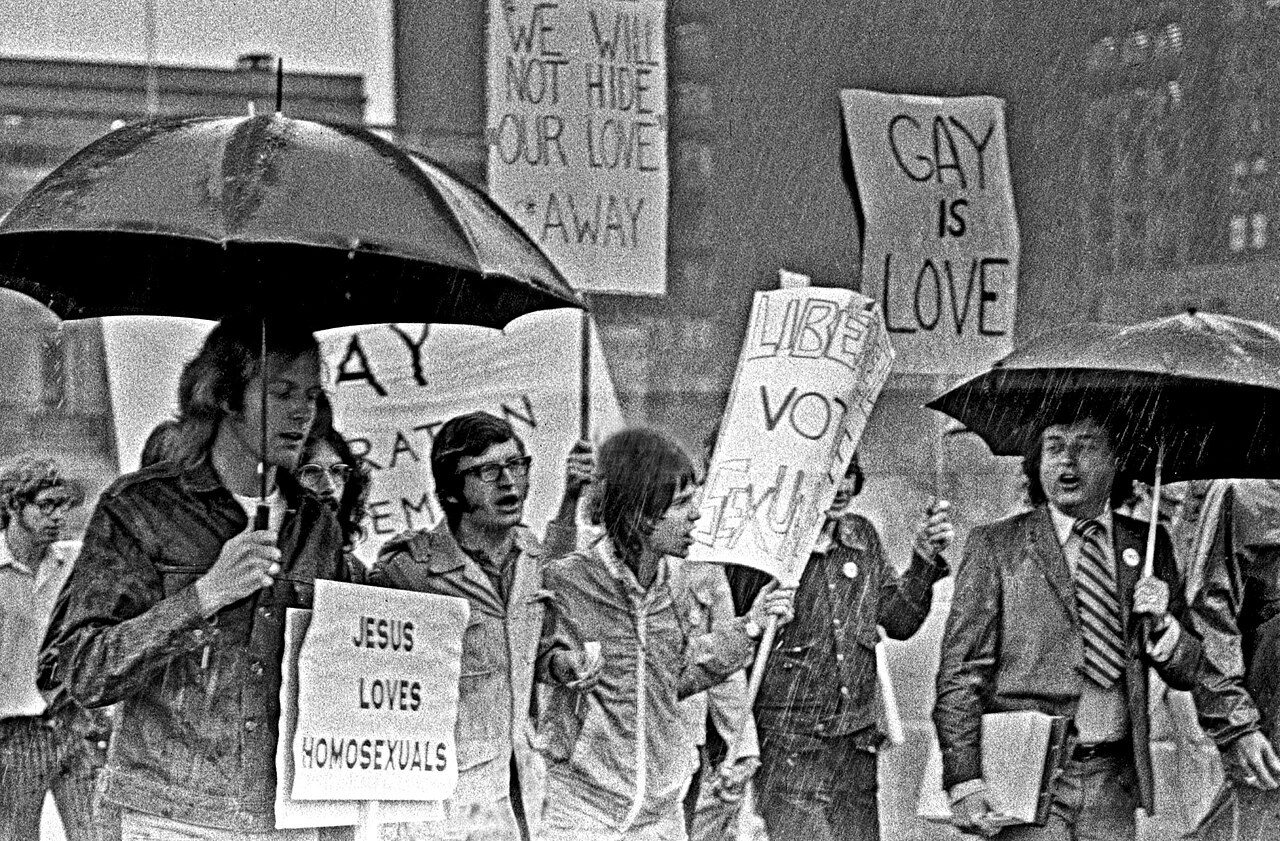
On August 28, 1971, roughly 100 individuals from Ottawa, Montreal, Toronto, and surrounding areas gathered on Parliament Hill for a historic rally dubbed “We Demand.” Even a torrential downpour couldn’t deter them. This marked Canada’s first large-scale demonstration for gay rights. A parallel rally, organized by a solidarity group, took place in Vancouver simultaneously. This initial demonstration played a crucial role in the quest for queer justice and gay rights in Canada.
The “We Demand” rally also made its mark on the history of feminism in Canada, representing a vital chapter in Canadian gay rights activism.
Fast forward to August 28, 2011, when a commemorative march took place on Parliament Hill, celebrating the reforms achieved since that initial rally. This event, a conference titled “We Demand: History/Sex/Activism in Canada/Nous demandons: Histoire/Sex/Activisme au Canada,” marked the 40th anniversary of the original march.
Evolution and Challenges
In 1981, the New York Times reported on a rare cancer found in men, with medical professionals describing the emergence of a “rather devastating” illness. Throughout the 1980s, the gay and lesbian community united in response.
On August 24, 1982, Ottawa’s gay community organized a public meeting with officials from the Canadian Laboratory Centre for Disease Control of Health and Welfare. Shortly after, on September 11, 1982, Mayor Marion Hilda Dewar cut the ribbon at Ottawa’s first feminist bookstore, symbolizing the growth of the women’s community. By 1986, the AIDS Committee of Ottawa had launched public awareness campaigns promoting safe sex practices.
These earlier events paved the way for Ottawa’s first Lesbian and Gay Pride march on June 26, 1986. Approximately 50 individuals gathered at Stratchcona Park for a picnic organized by members of Gays of Ottawa. The air was filled with music and dancing, and colourful balloons adorned with gender symbols and “gay pride” slogans were everywhere.
The city’s first ever Lesbian and Gay Week took place from June 9 to 18, 1989, culminating in Ottawa’s inaugural Pride Parade on June 18. This historically significant event for the local community drew around 300 participants.
Festival Program Highlights
Ottawa Capital Pride offers a diverse celebration program, featuring bilingual events in both English and French (Capital Pride / Fierté dans la capitale). Here are just a few key highlights:
- Throughout the week, Ottawa Capital Pride organizes a variety of sports events. These promote active recreation and community bonding through athletic activities.
- One of the festival’s central events is the rainbow party. Imagine a lively atmosphere with music and dancing, perfect for mingling with diverse community members.
- The family picnic creates a safe and welcoming space for everyone to celebrate together.
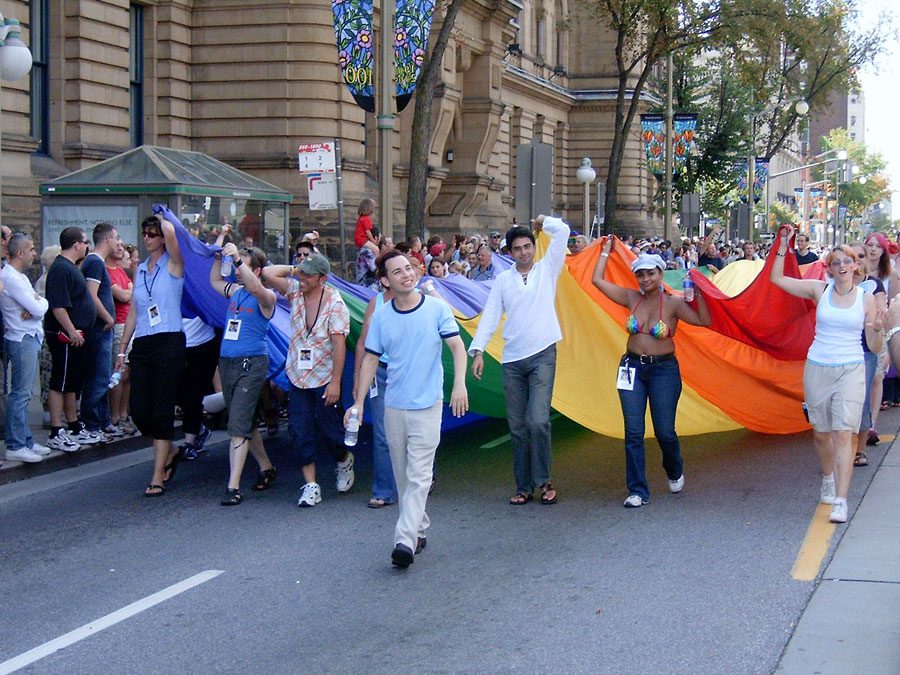
- The most anticipated event of the festival is the Pride Parade. This vibrant procession through the streets showcases pride, unity, and unwavering support. The annual parade draws thousands of participants and spectators alike.
Beyond these main attractions, the festival also features live musical performances across various genres, DJ sets, dance parties, captivating performances, drag shows, themed evenings, film screenings, art exhibitions, and insightful educational lectures and discussions.
Changes and Evolution
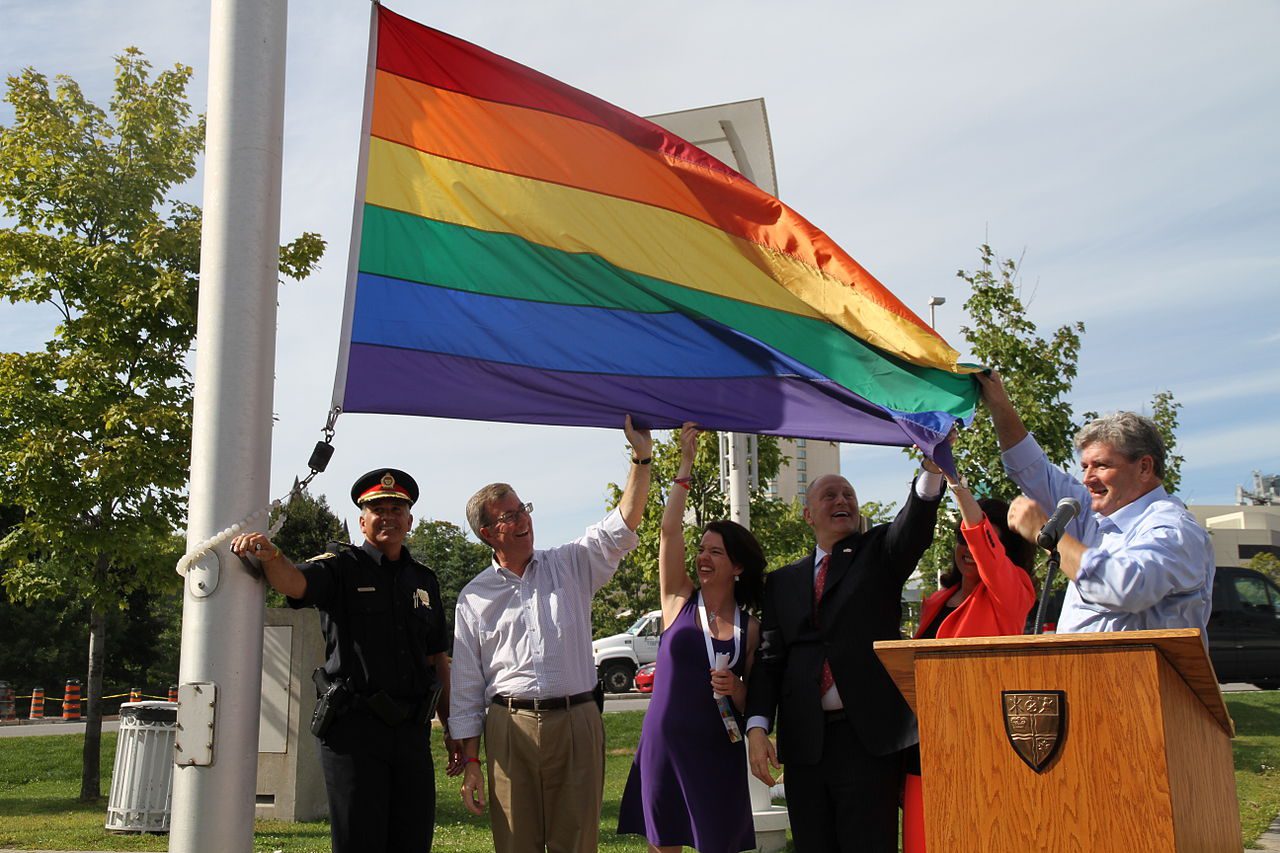
In January 2015, a new leadership group came together to ensure the success of the festival’s 30th anniversary. This led to a strong partnership between Capital Pride and the Bank Street Business Improvement Area (BIA). The organization is now governed by a Board of Directors, responsible for overall strategic direction, and a Festival Operations Committee, tasked with executing the annual festival.
The annual Ottawa Capital Pride festival serves as a crucial platform for LGBTQ+ rights. Through this event, significant legal victories and inclusive initiatives have been achieved. Despite financial and other challenges, the festival remains a powerful symbol of pride and unity for Ottawa’s LGBTQ+ community.
During the festival, the intersection of Bank and Somerset Street West, the heart of Ottawa’s gay village, is transformed into a vibrant entertainment hub. This area comes alive with live music, a community fair, and a bustling beer garden, providing Ottawa residents with a fantastic opportunity to relax, socialize, and have an incredible time.