

The modern film and television industry is changing rapidly, steadily casting off long-held stereotypes—and Sandra Oh has been one of the driving forces behind this historic transformation. Her career is far more than just a talented woman’s success story; it is a textbook example of shattering systemic barriers in Hollywood. From her humble beginnings in the suburbs of Canada’s capital to her triumphs on the Golden Globe stage, Oh has consistently chosen complex, multifaceted roles that defy screen clichés surrounding ethnic minorities. Today, she stands as a symbol of a new television era—one where genuine talent and charisma outweigh outdated Hollywood conventions, reports ottawaski.com.
Sandra Oh’s Early Life: Growing Up in Nepean and Rejecting the Traditional Path
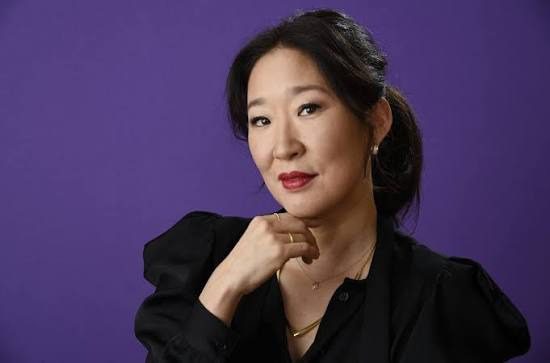
Sandra Miju Oh was born on July 20, 1971, in Nepean (now part of Ottawa), Ontario, Canada. Her parents—businessman Oh Jun-su and biochemist Oh Young-nam—emigrated from South Korea in the 1960s in pursuit of better opportunities. Raised in a household where academic excellence was paramount, young Sandra faced a pivotal crossroad. While her brother and sister pursued traditional, highly regarded careers in medicine and genetics, she discovered an overwhelming passion for the performing arts.
Her journey began at age four when she started taking ballet classes. Over time, classical dance discipline grew into a fascination with acting. At Sir Robert Borden High School, Sandra became the star of the local drama club, performing in school productions and taking home top honors at Canadian youth theater festivals.
The defining moment of her youth came right after high school graduation. Oh won a prestigious scholarship to study journalism at Carleton University. Her parents urged her to take it, but Sandra took a brave gamble: she turned down the offer. Instead, she paid her own way through the National Theatre School of Canada in Montreal. Her family viewed the decision as open rebellion, convinced that an acting career had no real future. Yet that bold, uncompromising choice laid the foundation for her brilliant screen career.
From Indie Cinema to the Phenomenon of “Grey’s Anatomy”: The Role of Cristina Yang
Her professional career took off in Canadian cinema. In 1994, Sandra beat out more than 1,000 contenders for the lead role in the television film “The Diary of Evelyn Lau.” Her piercing performance immediately caught the eye of critics. That same year brought the release of “Double Happiness,” which earned Oh her first Genie Award (Canada’s equivalent of the Oscar) for Best Actress.
Relocating to Los Angeles in the late 1990s presented a whole new set of challenges. At the time, Hollywood routinely pigeonholed Asian actors into narrow, background stereotypes—martial artists, computer nerds, or silent service workers. Sandra broke through this wall through sheer talent and undeniable presence. She made her mark on American television in HBO’s comedy series “Arliss” (1996–2002) and went on to win critical praise for her turn in Alexander Payne’s Oscar-nominated feature “Sideways” (2004).
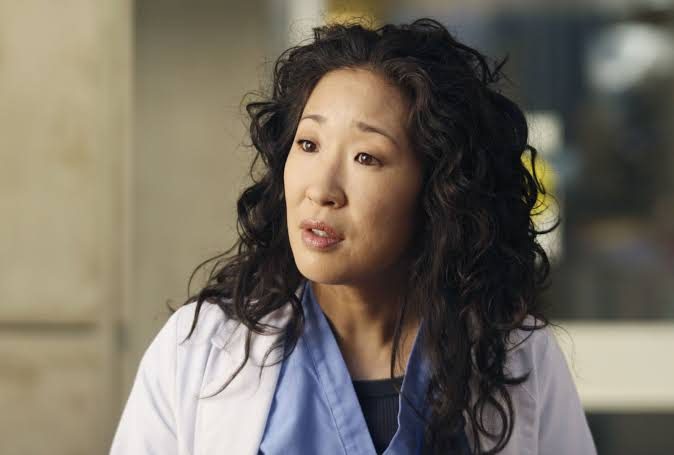
Her major worldwide breakthrough arrived in 2005 when showrunner Shonda Rhimes cast her as the fiercely ambitious cardiothoracic surgeon Cristina Yang in the medical hit “Grey’s Anatomy.” The show forever shifted the landscape of prime-time television.
The runaway success of Cristina Yang came down to several crucial elements:
- Unapologetic ambition. Cristina was unapologetically career-driven, placing professional mastery above everything else—a rare and refreshing trait for female characters on screen at the time.
- Nuanced characterization. She was deeply flawed: cynical, blunt, and fiercely competitive, yet capable of profound vulnerability and loyalty.
- Shattering casting norms. The role was never written specifically for an Asian actress. Sandra simply blew away the competition at auditions, proving that ethnicity should never dictate an actor’s range.
- A legendary friendship. The dynamic between Cristina Yang and Meredith Grey set the gold standard for authentic female solidarity and unconditional support on television.
Across ten seasons on “Grey’s Anatomy,” Sandra Oh earned five Primetime Emmy nominations, a Screen Actors Guild Award, and her first Golden Globe in 2006. When she chose to leave the series in 2014 to explore fresh creative horizons, it broke the hearts of millions of fans around the world.
“Killing Eve” and Milestone Records at the Golden Globes
Following her departure from the medical drama, Oh took a deliberate hiatus from major television, turning her attention to theater and independent film. She was holding out for a role that would genuinely challenge her. That project arrived in 2018 with the British spy thriller “Killing Eve.”
In a later interview, Oh recalled the emotional moment she first read the script. Having spent decades watching leading parts go almost exclusively to white actresses, she instinctively skimmed through the pages looking for a minor doctor or assistant to audition for. When her agent clarified that creator Phoebe Waller-Bridge wanted her for the title role—MI5 operative Eve Polastri—Sandra burst into tears. It was a revealing look at the deep, internalized barriers that minority actors had carried for generations.
Her portrayal of Eve Polastri—an intelligence analyst consumed by an obsession with the flamboyant assassin Villanelle—cemented her iconic status. In 2019, Sandra etched her name into Hollywood history by setting a series of unprecedented milestones at the Golden Globe Awards.
| Year | Award | Category | Project | Result |
| 2006 | Golden Globe | Best Supporting Actress – Series, Miniseries or Television Film | “Grey’s Anatomy” | Won |
| 2018 | Primetime Emmy | Outstanding Lead Actress in a Drama Series | “Killing Eve” | Nominated |
| 2019 | Golden Globe | Best Actress in a Television Series – Drama | “Killing Eve” | Won |
| 2019 | Screen Actors Guild Award | Outstanding Performance by a Female Actor in a Drama Series | “Killing Eve” | Won |
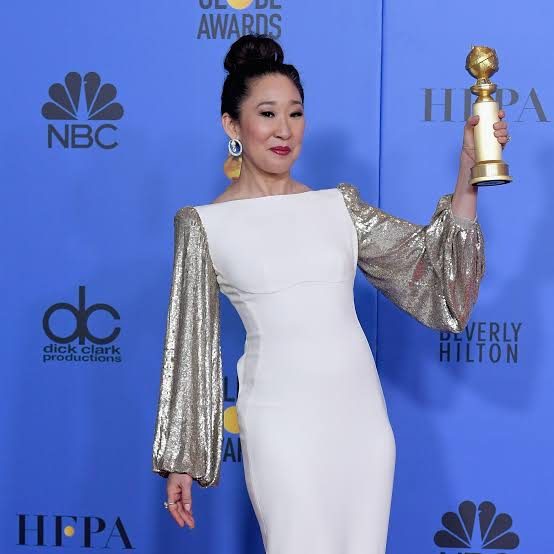
Sandra Oh became the first woman of Asian descent in 39 years to win the Golden Globe for Best Actress in a Television Drama (the previous winner was Yoko Shimada in 1980). That same evening, she made history as the first person of Asian descent to co-host the ceremony, sharing the stage with Andy Samberg. Her moving acceptance speech and heartfelt thank-you to her parents in Korean (“Mom, Dad, I love you”) became one of the broadcast’s most memorable highlights. On top of that, her 2018 Emmy nomination for the same role marked the first time an Asian actress was ever nominated for Lead Actress in a Drama Series.
Cultural Impact, Activism, and Sandra Oh’s Latest Endeavors
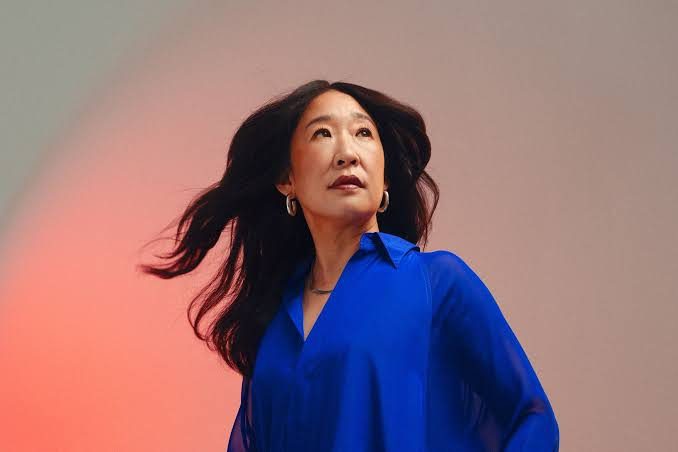
Beyond the screen, Sandra Oh is a formidable public voice. She has consistently embraced her cultural identity, speaking out candidly on issues of media diversity and inclusion. In 2019, Time magazine named her one of the 100 Most Influential People in the World. In a tribute for the issue, Shonda Rhimes observed that Sandra has always viewed storytelling as an instrument for making the world a fairer place.
Her leadership resonated with particular urgency during the pandemic, amid a sharp rise in anti-Asian hate crimes across North America. In March 2021, Oh delivered an impassioned speech at a Stop Asian Hate rally in Pittsburgh. Voicing the fear and grief of her community, she led the crowd in a chant that quickly made international headlines: “I am proud to be Asian! I belong here!”
In her recent work, Oh continues to tackle complex themes of identity, authority, and institutional life. In 2021, she starred in and executive-produced the Netflix miniseries “The Chair.” Playing Professor Ji-Yoon Kim, the first woman and person of color to head an English department at a conservative university, she brought razor-sharp wit to discussions of institutional bias, the humanities crisis, and the unique pressures borne by female leaders. She has also made an indelible mark in voice acting, lending her talents to major animated hits like Pixar’s “Turning Red” and the acclaimed superhero series “Invincible.”
Her trajectory—from an ambitious student in the Canadian suburb of Nepean to an international icon and decorated award winner—is a testament to unmatched grit and artistic integrity. Sandra Oh did not simply reach the summit of Hollywood; she reshaped the industry itself, expanding what is possible for generations of actors to come. Her career proves that authentic talent can shatter any glass ceiling when backed by resolute self-belief and the courage to stay true to who you are.